22 Ways to Take the Stress Out of Your First Triathlon

7729356230 34f8d921fa 2

It’s triathlon season! Shout it with me, people: IT’S TRIATHLON SEASON!

I haven’t always been such an overeager pain in the ass about this sport. I used to be scared — really scared — before triathlon races. I knew what I was doing as a runner, but triathlon was just so … complicated.

With running races, it’s simple: get a bite to eat and hit the porta-pot ahead of time, and beyond the actual running, there’s not a whole lot that can go wrong. But triathlons are a different beast, with not just three sports to worry about, but also the transitions and plenty of logistical opportunities for bigtime screw-ups that bodies of water and racks of bikes add to the mix.

Before my first few triathlon races, my hands would shake as I quietly set up my bike in transition area, and instead of confidently rehearsing what I needed to execute during the race, I’d focus on everything that could go wrong:

  • What if I have a panic attack during the swim and hyperventilate?
  • What if I forget where I put my bike and wander around transition like an idiot?
  • What if I drop a water bottle and get dehydrated?
  • What if I make a total ass of myself?

Sound like you?

Fears like these prevent a lot of runners from ever jumping into the triathlon game, and it’s a shame. In addition to providing runners with more strength than ever before (cycling is an excellent cross-training activity), accomplishing the mental challenge of triathlon gives an athlete more tricks in their wheelhouse for breaking through “the wall” of their next road race. On a personal note, triathlon has given me confidence I didn’t have before, introduced me to friends around the world, and led me to a new career with No Meat Athlete and print magazines Competitor and Triathlete. Triathlon has changed my life – literally. All because I took a chance on a new sport.

Read more »

11 Comments


My 12-Hour Race Report, and a 102-Mile Fastpacking Adventure

Podcast Radio2Well, I’ve officially cleared the biggest hurdle on my path toward running a 100-miler (until race day, that is): a 50-mile training run.

Actually, 52.7 miles. Last Saturday I ran the Black Mountain Monster, a 12-hour race around a 5K loop that comprises single-track trails, roads, and a few fields. I had hoped to cover 100K (62 miles) on the day, but when I completed my 17th loop at 11 hours and 15 minutes, I was fairly certain I couldn’t run another in 45 minutes, and called it a day.

Anything over 50 miles was good enough for me and for my preparation for the 100-miler, so the race was by no means a failure. But still, 10 miles short of my distance goal is a lot, and I can mainly blame myself for that — I started out way too fast, clocking 10-minute miles for the first three loops, when a steady 11:30 pace was all I would have needed to reach 100K.

The good news, though? I learned more during this race than in any previous one. I paid careful attention to exactly how many calories and electrolytes I was taking in, my paces, how my body responded to the heat, my shoes, and much more. Nothing like a little fear of running 100 miles to make you get serious, I guess – I even took notes! (You can see them here, if you’re interested. I’d love to hear answers to my questions at the bottom from any experienced ultrarunners; feel free to leave them in the comments on this post.)

I’m not a huge fan of writing race recaps — I honestly can’t imagine someone sitting in front a computer long enough to read thousands of words about my race. But somehow, listening to those words on a podcast seems a bit more reasonable, so all the details are in this episode.

Doug, my co-host on the podcast, did a little ultra-adventure of his own the previous weekend — a 102-mile, mostly self-supported trek over three days on the Appalachian Trail. This style of covering a fairly large amount of ground (compared to traditional hiking) is called “fast packing,” and Doug tells us all about his first experience with it here.

Enjoy the show!

Click the button below to listen now:

Audio clip: Adobe Flash Player (version 9 or above) is required to play this audio clip. Download the latest version here. You also need to have JavaScript enabled in your browser.

Or:

Read more »

11 Comments


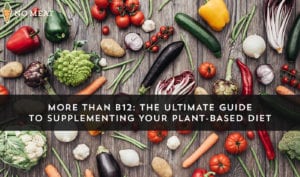
Are You Getting the Nutrients You Need from Your Plant-Based Diet?

the 4 hour body 244x300I make no secret of the fact that I’m a huge fan of author and blogger Tim Ferriss. His personality and approach are (apparently) polarizing, but his experimentalist attitude of questioning long-accepted (but untested) assumptions, testing them, and valuing the results over theory makes total sense to me.

Tim’s work is fascinating. The 4-Hour Workweek is the most valuable business book I’ve ever read (well, it’s a tie between that and Seth Godin’s Tribes). The 4-Hour Body is perhaps even more interesting; it’s a “choose your own adventure”-style book, one that’s not meant to be read cover-to-cover. And Tim’s most recent book, The 4-Hour Chef, though far from vegan-friendly, is one I’ve learned a lot from — about cooking, sure, but even more about learning.

Tim is not a vegan or vegetarian. Anyone who has so much as flipped through The 4-Hour Chef, especially the section on hunting, knows this. But this isn’t to say he’s anti- plant-based diet. Indeed (from The 4-Hour Body):

I suggest a two-week PPBD (primarily plant-based diet) test after 3-4 months on the Slow-Carb Diet. No matter where you end up afterward, the awareness will lead to better decisions that benefit appearance, performance, and the planet as a whole.

And I especially love what he writes in regards to the all-or-nothing approach many people have towards diet:

It’s better for the environment if you locally source a 70% PPBD indefinitely, rather than eat 100% vegan for two months and quit because you find it unsustainable. Some vegans, lost in ideological warfare, also lose sight of the cumulative effects: getting 20% of the population to take a few steps in the right direction will have an infinitely greater positive impact on the world than having 2% of the population following a 100% plant-based diet. To both uninformed meat-eaters and vegetarians — stop ad hominem attacks and focus on the big picture.

(If you’ve read my post Why Vegans and Paleos Should Stop Hating Each Other, it shouldn’t surprise you that I wholeheartedly agree with this last line.)

Read more »

Embed This Image On Your Site (copy code below):

18 Comments


Final Preparations for My 12-Hour Race

logoNext Saturday morning at 10am sharp, I’ll head over to Black Mountain, NC, about half hour east of me, and run a 5K loop. It’ll be slow — probably an 11-minute mile pace.

And then I’ll do it again.

And again.

And again and again, for 12 straight hours, until the gun sounds at 10pm. If all goes well, I hope to cover 100K, or 62 miles, during the time. Twenty 5K laps.

The funny thing is, even though this format of racing is new to me, I’ve never felt more relaxed about an ultra. Partly, it’s because this isn’t my “A” race — although it’s technically a race, the real purpose is to serve as my longest training run for the Burning River 100-miler in eight weeks.

But it’s not just that it’s a training run — I mean, it’s still an ultra, and 12 hours is almost two hours longer than I’ve ever run before. There are a bunch of reasons why this time, I’m not at all worried about running all day.

Read more »

90 Comments


How to Eat Healthy When You Just Can’t Find the Time

iStock 000023148476XSmallAs you may know, two weeks ago we welcomed the fourth member of our family into the world. She is beautiful, mellow, and most importantly, healthy. And for that, we’re incredibly grateful.

We’re also not getting any sleep. Which doesn’t slow down our three-year old one bit, so the fun is compounded.

Every minute, morning and night, it seems, is occupied by a kid. Our house is a happy, lived-in, played-in wreck right now, and it’s all I can do to carve out an hour to run each day. (Mega-props to my wife, Erin, for holding down the fort while I got in 24 miles on Sunday in preparation for my 12-hour race, in just nine days.)

So you can bet the coffee is flowing. But although I’m a bit more caffeinated than usual (on my second cup, as I write this), I’m pretty proud of how well we’ve managed to keep eating well, during this time when I’m sure we need good nutrition more than ever.

Read more »

36 Comments


From Overweight to Ultra-Endurance Athlete: Our Interview with Rich Roll

Podcast Radio2Late one night after a long day of work, just before his 40th birthday, Rich Roll polished off some fast-food cheeseburgers as he watched TV before heading to bed.

As he walked up the stairs, Rich had to stop, bend over and catch his breath before he could continue. Sweat was on his brow. The stress and busyness of life on the partnership track at a law firm had taken their toll on the body of this former Stanford swimmer.

Instead of blaming his work or coming up with another excuse, Rich did what most people don’t. He seized the moment. He decided then and there that things would change — that things had to change.

It’s hard to believe that just two years after the staircase incident, Rich finished one of the most grueling endurance events on the planet — Ultraman, essentially a double Ironman-distance stage triathlon — in 11th place, no less. And the following year, Men’s Fitness magazine named him one of the 25 Fittest Guys in the World. (Oh, and did I mention Rich did it all on a plant-based diet?)

In this episode of No Meat Athlete Radio, Doug and I had the absolute pleasure of hanging out with Rich, author of Finding Ultra and now host of the wildly popular Rich Roll podcast, to pick his brain about the behaviors and mindset that allowed him to make such dramatic changes, going from overweight and unhealthy at age 40 to one of the most famous vegan athletes in the world — all in the span of about two years.

Read more »

174 Comments


Why Vegans and Paleos Should Stop Hating Each Other

Last week after I wrote a post called 10 Foods Worth Eating Every Single Day, something interesting dawned on me:

Most of the foods that I eat — and those in a typical healthy vegan diet (as opposed to the junk-food variety) — are Paleo.

Sure, the seeds are iffy. And I probably eat beans three or four times a week, and even wheat once in a while, which Paleos wouldn’t do.

But beyond that, the foods on my list, by and large, could have been eaten by a caveman.

Guess what? The converse is true, too. Most (yes, most) of a Paleo dieter’s foods are vegan. They’re whole foods, including a ton of vegetables and nuts, a fair amount of fruits, and no dairy.

Though we focus on the differences in our diets, and fight like pissed-off hornets as a result, the healthy versions of both Paleo and vegan diets look an awful lot alike.

Here are just a few of the things we agree on:

Read more »

160 Comments


10 Foods Worth Eating Every Single Day (and How to Make Sure You Actually Do It)

iStock 000002424643XSmallNobody needs another “10 Healthiest Foods on Earth” article, or another “25 Can’t Miss Superfoods” slideshow that makes you click “Next” 24 times.

They’re fun, sure, and everybody likes saying “Hey, I eat that one already!” But as far as actually helping us to eat better, lists like these are pretty worthless.

The problem? None of them helps you to eat these foods habitually. We see the list, we make a mental note to eat more X, Y, and Z, and then we forget we ever read it as soon as someone sends us a cat video.

With that in mind, I present my version of the list — with a twist. The foods here are the ones I actually do eat every single day for their health benefits, but more importantly, I explain how I make sure to eat each one.

You’ll see that incorporating these foods daily (or any food you want to eat daily) is like creating any other habit.

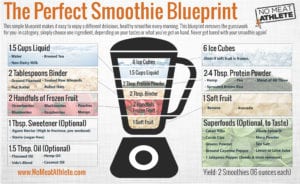
You’ll also see why I link to the Perfect Smoothie Formula so often, and believe that adopting just this one habit can make a dramatic difference in your health. 

Read more »

64 Comments