


Stu Mittleman: Burning fat (not sugar) for 1000 miles
I make no attempt to hide the fact that I’m a huge Tony Robbins dork. As my first post explains, it was at Tony’s Unleash the Power Within seminar where (in addition to walking across hot coals) I was inspired to become vegetarian and start this very blog. I’m not going to try to sell you on what Tony teaches, but what I like about him is that he studies the people who are getting the most incredible results in certain areas of life, then models them and teaches what he has learned. It’s about results, not theory.
To model someone getting astounding results in the area of physical performance, Tony turned to a man whose accomplishments are truly amazing. A man who ran 1000 miles in less than 12 days and holds the American record for distance in six days — 577 miles. That man is Stu Mittleman.
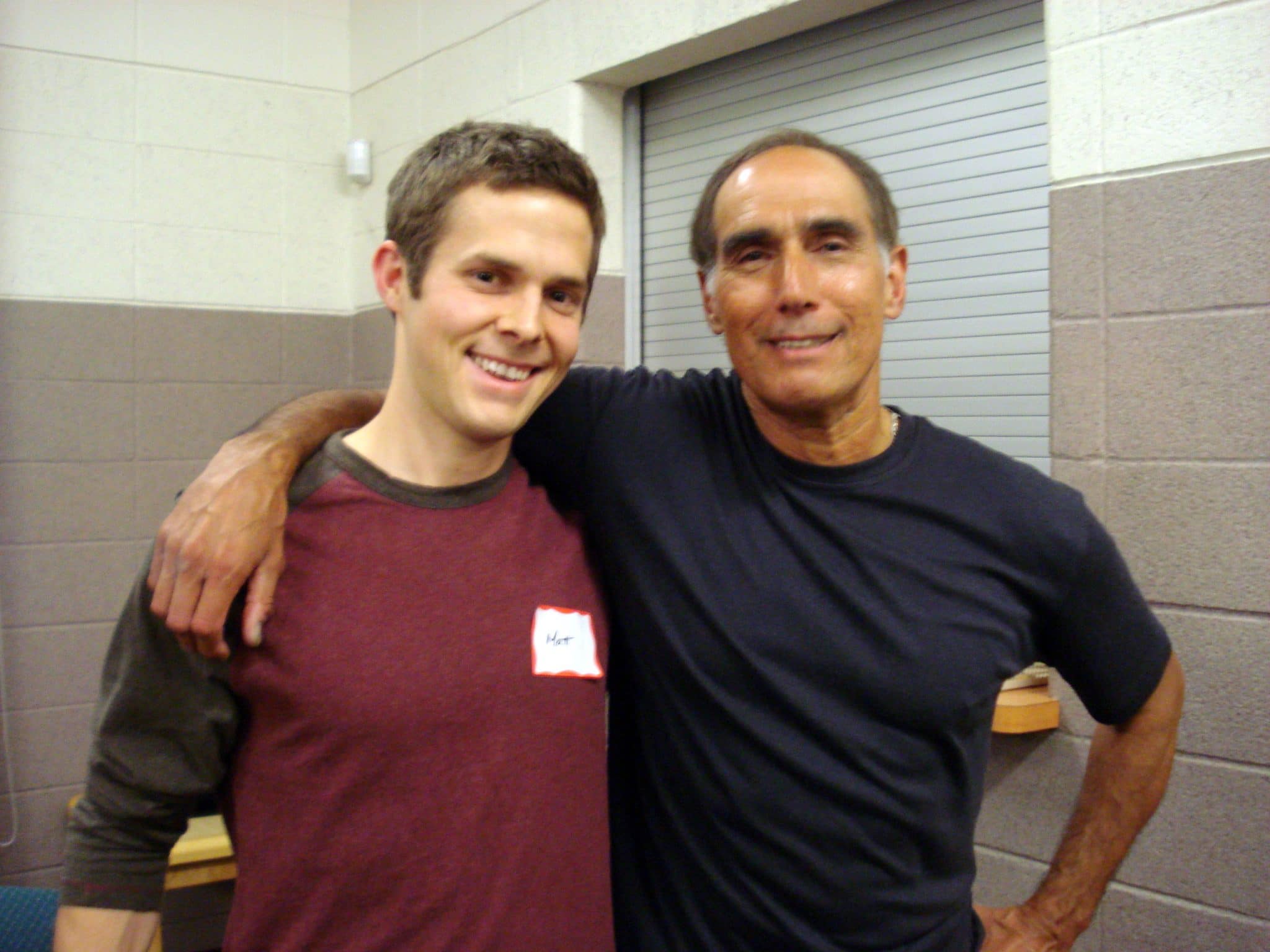
On Tuesday night, I got a chance to see Stu speak to a small group of about 40 people, as part of a Tony Robbins PowerTeam meeting (told you, I’m a dork). For two hours, Stu talked about his story and the things he has done to train his body to burn stored fat rather than sugar for energy, the primary reason he’s able to run such incredible distances. Stu’s beliefs are radically different than traditional fitness tenets, so be warned. But you don’t see the Governator, Jillian Michaels, or Tony Little (The Gazelle!) running across the country, do you?
Rather than try to synthesize a coherent story out of my notes from Stu’s talk, I’ll just list the points I took away from it.
Stu’s diet and training principles
- In most every culture, athletes that achieve elite status have shorter-than-average life expectancy. The reason? Elite athletes are generally built for short, fast movements and spend much of their lives training in an acid-producing, stressful, anaerobic state. They shouldn’t be the ones we look to for lifelong fitness advice.
- Of the roughly 160,000 calories worth of energy in our bodies, only 4500-5500 are stored as sugar, and the nervous system requires much of this sugar energy. When athletes “bonk,” it’s because the brain shuts the muscles down in order to conserve sugar for the nervous system.
- 146,000 calories (85%) of our energy is stored as fat. By training our bodies to burn fat rather than sugar for fuel, we can tap into this nearly endless supply of energy and achieve unbelievable levels of endurance.
- Our modern, mostly-sedentary lifestyle is so different from the way humans have lived for nearly our entire existence. To compensate, people try to work out at high intensities for short periods of time. The body turns to sugar to fuel such intense states of exercise.
- Exercising in an anaerobic state and consuming sugar create acid in our bodies. The acid is quarantined in fat, making it difficult to burn fat for fuel and creating a vicious cycle. To break out of this cycle, we need to eat alkalizing foods and train primarily at low intensities.
- Half of the time we spend exercising should be in a comfortable, aerobic state in which it’s easy to carry on a conversation. Of the remaining half of the time, two-thirds should be spend at threshold level (where aerobic becomes anaerobic) and only the remaining one-third should be spent at an anaerobic level. This distribution can be visualized as a pyramid.
- We are designed to be the most able roamers of the earth. It’s psychological concepts like “the wall” and worrying about things that haven’t happened yet that prevent us from doing what we’re capable of. Most of these concepts have been invented by people trying to sell us stuff to prevent them.
- Exercise should be done mostly in a state of total awareness, processing everything you’re experiencing and “learning to be everywhere your body is.” Stu uses sights, sounds, and feelings rather than heart rates and intensity levels to describe exercise states, since our bodies vary so much.
- The body doesn’t know miles; the body doesn’t know pace. It knows only frequency, duration, and intensity.
- Stu’s diet consists primarily of water, salads, oils, low-temperature cooked vegetables, vegetable soups, certain lower-starch grains, seeds, nuts, and fish. He used to be a vegetarian but believes fish is very healthy.
- Regarding supplements, Stu thinks it would be preferable to get our greens through whole foods, but because of the stresses of modern life, he considers greens supplements to be an “alkaline seatbelt on the acidic highway of life.”
- I asked Stu after his talk about what he consumes during a long run, and he said he eats mostly things like almonds or pureed vegetables, not sugar. Certainly not commercial sports drinks, and not even something like a banana!
- “Focus on results and you won’t change. Focus on change and you’ll get results.”
Stu might be the only runner I’ve ever heard of who doesn’t eat sugar for fuel on long runs. I mean, endurance runners practically survive on gels, gummies, and sports drinks! The idea that sugar is a good thing when you’re running is nothing short of gospel. But it’s hard to argue with Stu’s resume, so consider me intrigued.
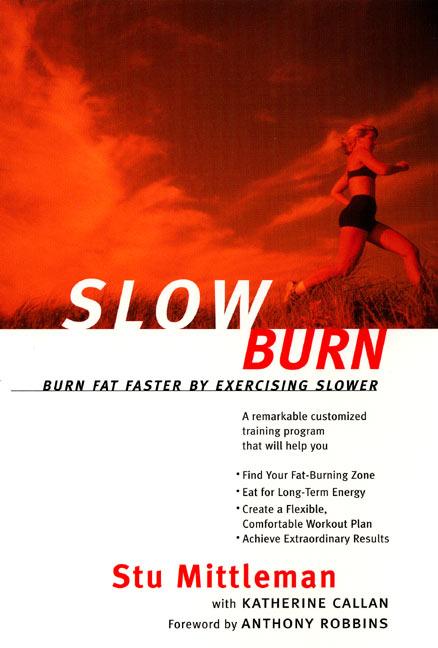 I really doubt my summary has done justice to the inspiration I gleaned from listening to Stu speak. I was so excited about this stuff that as soon as the talk was over, I ordered a copy of his book, Slow Burn: Burn Fat Faster By Exercising Slower
 . I can’t wait to read it and start applying it to my ultra training.
Hope you’re inspired to put this information to good use! I’ll be sure to write a book review once I’m finished with Slow Burn. If you see a post called “How I Ran 600 Miles” or “I’m Running to California Tomorrow,” then you’ll know that it worked!

Leave a Reply
-
Saundra, no I haven’t read that book. But I’ll check it out after Stu’s!
Hi Matt,
Thank you for sharing your experience in such a concise and thorough way!
OK, so my question to you now is after seeing Stu, do you think you will change your running pace? I’m only asking out of curiosity because…
I always feel pressure to run faster for some reason (often self-imposed pressure). After I read his book a few years back, I definitely felt better about running slower. Over time, I’ve found that I’m most ‘comfortable’ at a 10 min mile pace – I can go faster, but I don’t enjoy it as much. Do you experience that ‘type A’ pressure too?
I’ll have to re-read his book now that you mention alkalinity… when I read it the first time I was into figure competitions and all about the protein – so I’m sure I skimmed right over that topic in the book. Now that I’m don’t eat meat, save a random piece of fish, I often aim to eat non-acid forming foods.
Sorry for the long comment…!! BTW, I’m a Tony Robbins dork too! I usually just need to put on the first CD of his two programs I have, and it gets me motivated all over again!!
-
Shari, I’m not really sure what I’ll do, and certainly reading his book will help me decide. Racing is part of the fun for me, so I will still try to run fast in races. I know that I still have some speed goals, like one day running a 3-hour marathon, but I can appreciate that maybe that kind of training isn’t as good for my long-term health as slower running is. So I envision myself still doing that just because it’s a goal, but understanding that it’s not the ideal way to train long-term. Or perhaps I’ll find that training in Stu’s recommended proportions is actually the best way to get faster for races? Lots to learn, it’s exciting!
Always fun to talk to fellow Tony Robbins dorks. Some people just don’t get it. 🙂 -
Bernadette-
I was at Stu’s talk with Matt and he said something about slow running that was really funny. He said that after working with a wonderful coach he followed his advice for his next 6 day race… and for the first part of the first day actually WALKED! As I recall, he was representing the American team and he said everyone boo-ed! It was so hard to just keep walking, but by the 5th day he passed the person in second place and was right behind the first position.-
Great story. After a year of putting most of Stu’s theories into action, I think everyone should do the same. He is brilliant!
-
Hi Matt,
Interesting… just from the brief bullet points you’ve given it sounds like alot of the same principles as Thrive??
It definitely makes alot of sense , I can’t wait to read your review and look into this a bit more!
Thanks for the info!
-
Hi Bernadette, great observation. I was thinking exactly the same thing and I almost wrote that in the post, but decided not to because it was getting long! Stu said he eats fish and every once in a while some grass-fed beef. He didn’t mention dairy, but I know Tony Robbins doesn’t like dairy stuff and he got a lot of his nutrition ideas from Stu.
Stu didn’t mention stimulation but many of the stimulating foods are also acid-producing, so they go hand-in-hand. The major difference I noticed is that Brendan does use sugar for fuel while training and racing (Vega Sport, for example).-
I was thinking the same thing about Brendan using sugar(or agave) in training and in his bars and such.
I just checked Amazon and the price of the book is pretty reasonable and the small part I was able to read was very interesting.
Not to have you jump ahead in the book or ruin your review but does the book include meal plan ideas and/or recipes?? -
Just to give you some feedback. When I ran my first half marathon, I was already very much into alkalising. The race was at mid day, so for breakfast I had a salad (with olive oil) and drank about a litre of Tony Robbins ultra greens and some water. During the race, I only went for water, but just once, near the mid point, I reached for an energy drink. Guess what? After the first sip, I felt uneasy, heavy, uncomfortable. I threw it away. Maybe it was psychological, but it was interesting. Also, I had soaked almonds during the run. The man is a legend!
-
Wow. I loved this post
Half of the time we spend exercising should be in a comfortable, aerobic state in which it’s easy to carry on a conversation. Of the remaining half of the time, two-thirds should be spend at threshold level (where aerobic becomes anaerobic) and only the remaining one-third should be spent at an anaerobic level. This distribution can be visualized as a pyramid.
That really jumped out at me. When I run and look at others running, there’s a lot more discomfort in their faces than mine. i thought i wasnt pushing myself enough but now I’m thinking otherwise. Also, I really like his idea of not eating sugar. I’ve never tried a gel and frankly don’t have much interest in them. Even on my longer runs I prefer a larabar or something more like food.
Interesting concepts. Not thinking it would work for me, but interesting none the less. I try to be strict w/ my eating, but even for running I won’t give up everything I love to eat. And I do love some sugar 🙂
I think I usually am pretty good about not killing myself in a workout, but somedays those workouts are a KILLER. Especially when you aren’t in great shape 😉
I agree with a few commenters above – seems like Stu’s mindset is very similar to Brendan’s, which is great! I really enjoyed reading Thrive and have incorporated a lot of the information into my daily life.
I have to say, though, that I do love running fast, and trying to run even faster. Plus, since I generally workout during a lunch hour, I want to get a tough sprint in before sitting back at my desk for 4 hours! I do savor my long, lazy weekend runs though.
Have you read Fit Soul Fit Body? If you haven’t, you might find it interesting!
.-= katherine´s last blog ..Two Faced =-.
I’m by no means an experienced runner, but has anyone tried running with a very low amount of carbs in their system? I’d think you’d burn out faster. Stu has obviously proved that theory wrong but I’m just wondering if any other runners out there fuel themselves in a similar way before a run.
Hmmmm – I’m skeptical but definitely intrigued.
Wow… very impressive. Thanks for sharing this information!!! I have never heard of Stu and now I am so glad that I do. I am very intrigued by everything he says and agree with the bullet points. I have been told to eat sugars as well for energy… though now I am curious to try not eating them before workouts to see what happens. I am a big believer of greens supplying all the energy and nutrition you need!! I have been increasing my green intake and have noticed great improvements in my overall health and physical performance.
.-= Pure2Raw Twins´s last blog ..We all scream for Ice Cream =-.
Great post today! It is funny because this is the second time this week I have heard about limiting carbs/sugar on long runs. The 11/3 podcast on Endurance Planet featured someone (I am sorry that I cannot remember who it was) talking about the same thing. I am definitely intrigued as well as I am training for a marathon and trying to lose 20 pounds. I hate having to use gels, etc. but I thought it was what I needed to do. Now I am thinking otherwise. I will have to do more research. Thanks for such a great blog!
.-= Laura´s last blog ..Managing Pain =-.
This was great. First, I’ve heard Jillian Michaels talk about Tony Robbins but didn’t know what he was about. I know this post wasn’t really about Tony but now I’m curious to know more about him!
I think I’m a little confused about aerobic vs. anaerobic… and the same line that Evan quoted:
Half of the time we spend exercising should be in a comfortable, aerobic state in which it’s easy to carry on a conversation. Of the remaining half of the time, two-thirds should be spend at threshold level (where aerobic becomes anaerobic) and only the remaining one-third should be spent at an anaerobic level.
Why does anaerobic activity make me think of things like lifting weights? How does aerobic become anaerobic? I guess I’ll just have to read this book!
How cool that you got to hear Stu speak and meet him too!
.-= Alison´s last blog ..Change of Plans =-.
-
Hey Alison, glad you liked it! And I saw that it helped you have an enjoyable long run today.
You’re right that anaerobic is what most weight lifting is. Faster, more intense, shorter-duration movements. When you sustain this type of activity, like running at a decent pace (maybe half-marathon pace?), it becomes hard to hold a normal conversation because you’re out of breath. Aerobic is much more comfortable, like slow running. If you’re doing it right, you can carry on a completely normal conversation without running out of breath. There is a point where aerobic becomes anaerobic, and that’s threshold.
Let me know if this clears it up!
Thanks for your interview/thoughts on this subject. Very interesting to read about some different perspectives on nutrition and exercise than the “accepted norms” and get some ideas for tweaking our own routines.
Very interesting post!!
Courtney
Adventures in Tri-ing
.-= Courtney´s last blog ..Workout Queen =-.
You know, this post intrigued me. He makes a lot of sense… I have to check out that book!
Wow, this was a really interesting perspective. I didn’t know some of those stats about burning sugars vs. burning fat. I wonder if we can truly train our bodies to do that. I would LOVE to know. Let us know how the book is!
Stu has it 100% right; regular, consistant,hard training(for runners that means anerobic), is not condusive to long term health and longevity.
The irony of it all is that aerobic conditioning where you reach optimal aerobic fitness will get you where you need to be. Combine this with running a hilly course a few times a week and you develop the leg strength needed for speed. The biggest mistake runners make is they adhere to the false axiom that you have to run fast to be fast. The great running coach Arthur Lydiard wrote about the necessity of building maximum aerobic fitness to achieve top performance decades ago. Guys I ran with years ago who pounded too much and too often have long since quit or become cyclists after their bodies broke down.
I’ll be honest, I ‘googled’ Stu Mittleman and it brought me to this blog/site. And I’m sure glad I did. I just went to my doctor recently and found out that my blood pressure is a little higher than normal. This prompted me to search for ways to lose a few pounds and eat healthy. I am also an AR nerd and for the record, “I get it!” Implementation and consistency are equally important. I am still in the early stages of overcoming my self-inflicted boundaries. I am a firm believer that success leaves clues. At this stage of my game, who better to look at than Mr. Mittleman. Matt, please keep inspriring through your words and experiences.
Thank you.
-
Hi Irish, glad you found me. Always good to meet fellow AR nerds. Ever been to any live events? I started this blog after UPW last year, and I can’t wait to go to another.
I love it that you are a TR nerd- cuz I am too- I became alkaline just prior to seeing Tony and he reinforced everything for me that he learned from Dr.Robert O. Young whom I follow closely and more. I have Tony’s health tapes in my car and they inspire me everyday for a variety of posts for my blog as I grow it. I found Tony’s reference to Stu fascinating too. Tony knows how to find the leading experts and shares them so concisely. I eat just like Stu and I love it. Do you eat fish-pescatarian? or are you strictly vegan yourself? I am not sure how long I’ll eat fish, it’s getting harder and harder to find a good source of fresh wild fish. And I do think about the poor fish:( Thanks for the post:) Very inspiring!
Although I am not a very experienced runner ( I did triathlons in high school during the late 80’s and have since last year been competing in local running races and duathlons with not much exercise in between those two periods of my life ) I thought I’d chime in to let you know of my ‘slow running’ experience.
In high school I sat next to Brad Bevan ( Aussie Tri Champ 6 years running ) and he got me interested in Triathlons. In due course I learned about Mark Allen and even Lance Armstrong when he was 15 ! I googled Mark Allen last year to see where he is now etc and read that he used the Maffetone Method ( same method Mittleman uses ).
I ordered the book the Maffetone Method and read what I could on the net about it ( using sources like Mark Allen, Mike Pigg and Stu Mittleman etc ). If it works for Allen and Pigg then I’m definitely interested.
Anyhow I started using the method and am running at 180 less age less 5 heartbeats p/m. I ran a little in 2005 but got shin splints and my feet went numb after half an hour of running. Since using the method I have had no injuries and my feet don’t go numb anymore. My skin is a lot healthier and my immune system has definitely improved ( due to my Sunday long slow cycle I think ). I also used to sound like a wounded beast during races, very laboured breathing. These days I may huff and puff a bit but nothing like I did previously.
I have nothing but good things to say about the method.
My wife is breastfeeding but when she stops we will try the 2 Week Test ( See Maffetone’s website ). I previously didn’t do a MAF test ( also see website ) but my wife and I did our first ones earlier this week.
Strengthening the aerobic muscle fibres is a must for all endurance athletes and there’s no healthier way than to use the Maffetone Method.
Here’s an Mark Allen article ( which incorporates speed work ): http://www.duathlon.com/articles/1460
With regards to Carbs during racing MAffetone says its ok to eat them as you burn them straight away. You should not eat carbs just before a race or immediately after.
Here is Maffetone’s website full of interesting articles: http://www.philmaffetone.com/fr_home.cfm
In conclusion I must say that I have no association with Phil Maffetone or his website what so ever. I am just delighted with the results especially with the run this morning when I was flying along with a heart rate of only 133 – 137 !!
Start slow and be patient. The benefits will really come after a few months.
-
Marcel, thanks for your comment. The name “Maffetone Method” rings a bell, but I don’t think it was in Stu’s book anywhere, so I’m not sure where I’ve heard it. But I’m glad to know there’s a more formal method for this stuff than what Stu teaches in his book; I’m really intrigued. I’m going to check it out. Thanks again!
something to try?
baked eggplant puree
Ingredients:
* 1 pound eggplant (about 2 Italian eggplants)
* 3/4 cup extra virgin olive oil
* 2 teaspoons chopped garlic
* 1 tablespoon fresh parsley, chopped
* salt and freshly ground black pepper to taste
Directions:
Preheat oven to 425 F. Cut the eggplant on all sides with deep slashes and place in a baking pan. Roast until soft, 30 to 40 minutes. Set aside until cool enough to handle, about 15 minutes. Peel eggplant and coarsely chop (or briefly pulse in a food processor or blender). Place in a medium bowl. Mix in oil, garlic, parsley, salt and pepper.
a great soup to try!
avocado zucchini soup
* 2 tablespoons olive oil
* 4 green onions, chopped, divided
* 1 teaspoon grated fresh ginger
* 1 garlic clove, chopped
* 2 cans (14 1/2 ounces each) vegetable broth plus cup water
* 2 medium zucchini, thinly sliced
* 1/2 teaspoon salt
* 1/4 teaspoon pepper
* 1 medium avocado, seeded, peeled and chopped
* 1 tablespoon lemon juice
* 1 tablespoon chopped red bell pepper
Directions:
Heat oil in a large saucepan over medium heat. Add 2/3 of the green onions and cook 3 minutes; stir in ginger and garlic and cook, stirring, 1 minute more.Add broth, water, zucchini, salt, and pepper. Cover and cook 10 minutes, until zucchini is very soft. Cool slightly. Stir in avocado.Puree soup in batches in a food processor or blender. Return to pan to heat through. Stir in lemon juice. Garnish with red pepper and remaining green onions.
heyy! first wanted to say I am Brazilian and I love your blog, the information you post here are very valuable! With a goal of having optimal health and energy I run every day and follow a vegan and alkaline diet. But besides being healthy, I also want to increase muscle mass, and do weight training 5 times a week. The division of exercises during my week looks like this:
50% of the exercises at a moderate pace and aerobic (running)
50% of very intense exercise (weight training)
And this is different than stu mitlleman preaches.
Will do so much intense exercise during the week can be bad for mine long-term health? How can I increase muscle mass and at the same time follow the pyramid that Stu preach?
Thank you!
I definitely commend athletes who are determined and committed and kudos to all of you! I do not eat any sugar at all–some fruits but no processed foods at all.
However I’m very athletic: I’m a mountaineer, a female bodybuilder in my early 40’s and eat lean natural beef, game and whole grains. I do train hard with weights and also intense cardio and am at 11.7% body fat year round and my HDL and LDL levels are outstanding. AND I have a shift job where I work 12+ hours a day 14 days straight. Also, my blood pH is neutral even though my protein is higher than many Americans.
My point is if you like to run a lot…great! But there are ways to train hard and eat a lot of meat and be healthy and stay energetic.
Nice post.
I can recommend another (very old now) book love’ll – body, mind and sport. cant remember the author but you’ll find it easy.
The apart from the intensty thing, the main thing i picked up from this book was the ‘nose breathing’.
All very interesting.
Keep it up.
Hi.
I read Stus book and I like it and when I run as he recommends I feel good. However, it seems like all the latest research is saying that HIIT running or strenght training is much more effective for fat burn. So now I am all confused. I am a few KGs overweigh and I want to loose it. Have you heard what Tony Robbins or Stu is saying about this new research that has come? It seems as not many recommend low intesinty these days (except Tony and Stu).
Oskar
-
Hello Oskar, did you ever get a response to your question/query about HIIT vs slow burn? I am confused too and wonder what is most effective for losing weight.
Thanks.
Libragirl
Matt,
Very nice summary of Stu Mittleman’s ideas and concepts. We really enjoy your blog.
Thanks,
Bart & Eve at blueridgerunner.
Love the post and the summary. A little envious, as I too am a huge fan of Tony Robbins who I had the privilege of seeing a year ago live (only for a couple of hours) and it was a life changing moment for me. And I too remembered Tony mention Stu. Right after the event I noticed that in order to be able to operate mentally at a peak, I need to get in shape physically. I reached for Slow Burn, and it has changed everything for me. Looking forward to exploring your site…
Hi Matt,
Love this post dude, thanks for sharing! I am currently training and planning for a 4,350 km mountain bike ride across The Great Divide from Banff to Mexico. I have played with Keto, carb cycling and many forms of fat burning protocols and but am really looking to push the boundaries of my knowledge with this adventure. We will not be supported by restaurants or connivence stores, our anything really for days at a time. Do you have any experience with fuelling a fat based program in the backcountry? Stoked to hear back.
Wow! I just heard Tony Robbin’s talk about Stu. I am also a TR dork but have never experienced a live event lol. I have read the 7 Pillars of Health too. Thanks for the article. I look forward to more.
Hello
My name is Gilson Gonzaga
I’m 54 years old and I’m from Belo Horizonte, State of Minas Gerais in Brazil.
First of all, I want to congratulate you and tell you about my positive envy. Undeniably, I would like to be there in your place interviewing Mito Stu Mittleman.
I am currently 90 kilos within 1.90 in height. My diet, like that of most idiots, is the basis of large quantities of drugs in the food industry.
Which way do you give me to start a nutritional program in this line ….
I would like to have something accessible, to start running and deliver to people my age, a world of possibilities when they are thinking about retirement ….
Thanks for your answer…
Stu —
Years ago when I first read Slow Burn, I recall you’re mentioning a simple go-to meal consisting of brown rice, soaked almonds, avocado, onions and topped with lemon juice, olive oil, and Bragg’s. In going back through the book, I fail to find it. Am I mistaken? If not, can you refresh my memory of the ingredients, portions, etc.?
Thanks,
Ron Chalmers
Wow, such and inspirational story Stu has. It started me on my own journey and I hope I have as much success as he has. thanks!
Have you read “Seven Pillars of Health” by Don Colbert? Great source of info on alkaline diet! Great post, thanks.