



The 7 Secrets of Post-Workout Recovery
Everyone loves the post-workout meal. It serves as a reward, a celebration of having worked your ass off, and it’s a fantastic excuse to eat some of the sugars and simple carbs that we avoid most other times.
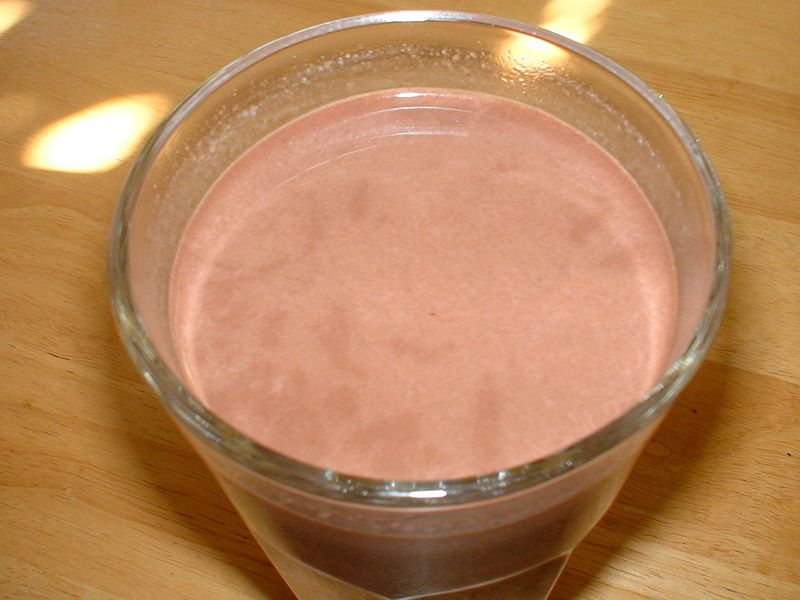 But many athletes are mistaken or unsure about what to eat after a workout. People are fond of believing that a glass of chocolate milk is the perfect post-workout meal. As someone who subsisted on the stuff for weeks at a time as a kid, I was delighted the first time I heard this news. But although it has a good carb-to-protein ratio, chocolate milk usually brings with it high-fructose corn syrup, and always the many downsides of dairy.
In search of a better way to refuel, I pored over several of my favorite sports-nutrition tomes: Chris Carmichael’s Food for Fitness, Thrive, Core Performance Endurance, and The Paleo Diet for Athletes. (I don’t follow the meat-happy Paleo diet anymore, obviously, but I still like it for its section on workout nutrition.) Interestingly, I found several recurrent ideas shared by these authors and athletes who are otherwise divergent in their approaches to the optimal diet for athletes.
I’ve compiled those ideas, plus a few that are less universal, but obviously important, into this list to help you decide what to eat after a workout, and when to eat it.
1. Respect the fuel window. In the 15-60 minutes immediately following a workout, your muscles are primed to receive fuel to start the repair process. Eat (or drink) your recovery meal right away, within the first half hour after the workout is complete.
2. Make it easy to digest. Your muscles need blood to deliver nutrients to them. The more of that blood that’s tied up in digesting a hot dog — sorry, any solid food — the less that gets to your muscles. Ideally, you should get your immediate post-workout fix in liquid form. Here’s the first strike against chocolate milk: Dairy is notoriously hard to digest.
3. Consume .75 grams of carbohydrate per pound of bodyweight, and include protein in a 4:1 or 5:1 carb-to-protein ratio. I’m not usually one for specific numbers around my food, but these were so common that I had to list them. Your carbohydrates should include high-glycemic index carbs, like glucose (dates are a good way to get it), and some slower-release, even fibrous, carbohydrates as well. And don’t forget the fat — include about half as many grams of healthy fat as you do protein. Flaxseed and hemp oils are my favorites.
4. Get out of the acid state with greens or other vegetables and fruits. Intense exercise creates an acidic environment in your body. If you don’t neutralize the acid with what you eat, your body will use the calcium from your bones and nitrogen from your muscle tissue to neutralize it. Greens, sprouted vegetables, and certain fruits like lemons and limes have a neutralizing effect on your body. (Yes, I know it’s weird, but lemons and limes are considered alkaline, not acidic, in the body.) Strike 2 for chocolate milk, as animal protein is acid-forming. So are heavily-processed protein powders; I use a minimally-processed real food protein powder in most of my smoothies.
5. Drink 2 cups of water per pound of body weight lost during exercise. What else is there to say? You need water, or you’ll die.
 6. Replace lost electrolytes. When you sweat, you lose electrolytes, the little conductors that transmit electrical impulses throughout your body. So you need to replace them; some good sources of electrolytes are fruit, dulse flakes, a few pinches of sea salt, and Nuun tablets.
7. Nourish your adrenal glands. Under the stress of an intense workout (or from caffeine if you included that in your pre-workout drink), your adrenal glands work hard to release hormones to help you perform. To help them recover, add a teaspoon of ground maca, a Peruvian root that packs the added benefits of better sleep and increased libido. Bonus!
Recovery doesn’t stop with your post-workout meal; you’ll want to eat again an hour or two later, this time focusing more on quality protein. And there’s more you can do that doesn’t involve food — stretching, self-massage and foam rolling, rest, and even wearing compression socks.
Here’s a recipe, from Thrive Fitness, for a recovery drink that satisfies all of the above criteria. I use slightly less dulse because I’m not completely used to the taste of it. Also, since this drink contains ground chia seeds, you’ll want to drink it immediately after you make it if you don’t want the chia to gel in the water.
Lemon Lime Recovery Drink
(from Thrive Fitness, reprinted with permission)
- 4 large Medjool dates (remove pits)
- 2 cups water
- 1 tbsp hemp protein
- 1 tbsp ground salba
- 2 tbsp sprouted buckwheat (or substitute cooked)
- Juice from 1/2 lemon
- Juice from 1/4 lime
- 1/2 tsp lemon zest
- 1 tsp ground dulse flakes
- 1 tsp maca
- 1 tsp greens powder (chlorella or spirulina)
Blend all the ingredients together in a blender.
Now get out there, so you can come back and recover! Before you do, take a look at the first post in this series, on what to eat before a workout. And look for the third and final post, on what to eat during the workout, soon.
For more posts (and recipes) on natural sports nutrition, check out the Running Fuel page.

Leave a Reply
I have to admit to breaking most if not all of these rules on a regular basis. That’s really weird about lemon/limes not being acidic to the body–go figure!
-
Evan, yeah I don’t really understand the lemon/lime thing either. They say it leaves an “alkaline ash” in the body, whatever that means. Maybe the body reacts with the fruit, and the byproduct is something alkaline?
-
What’s meant by an “alkaline ash” substance is that it increases (alkalizes) the pH of your urine.
However, urine is the ONLY bodily fluid whose pH you can control. The “acidic environment” you discussed earlier in the article is flat-out factually wrong. You cannot influence the pH of your blood or other fluids, organs or tissues via diet.
If you want to know what acidifying your blood is really like, hold your breath for one minute. When your nervous system finally overrides you and forces you to take a breath, you’re seeing the systems that your body already has in place to tightly regulate its pH.-
Thank you, Alexa. As a 3rd year medical student, you addressed my primary complaint of the article. The body has many systems for regulating pH, your breathing can increase (respiratory alkalosis – blow off more CO2, decreases acid, raises pH) or decrease breathing (respiratory acidosis – retain CO2, more acidic, lowers pH). The kidneys also have a few mechanisms to regulate pH just in case the lungs don’t make the appropriate change to keep the body’s pH in good harmony (7.35-7.45). You can read this in any physiology book about Acid-Base physiology.
-
A lot of chem people I talk to get pretty ticked about the whole acid/alkaline balance thing. Of course your blood is always neutral in pH, you would die if it went in any direction it shouldn’t. But when environmental stresses attempt to acidify blood then your body pulls alkaline resources from places we really don’t want pulled from to often over time. The body will always balance out the pH, whether we like it or not. The issue is not to take it for granted and let your bones leach out calcium and other areas be over exploited by the body. Good nutrition with about a 70/30 or 80/20 alkaline to acid emphasis will help prevent any kind of “acidic” influence that can be more troublesome long-term than short-term if not taken care of.
-
Wow. A substantial body of clinical evidence does not support your assertion. Things like heavily meat based diets are acid forming in the body.
Ever hear of the China Study? Or any of the books by Dr. Neal Barnard?
-
-
Love the post, super helpful. But define “intense workout” for me. 🙂 I’m training for a half marathon and usually run 2-4 miles a few times a week and then my long run. Last time I was religious about refueling after long runs but totally ignored the shorter ones. Should I be trying to do this after shorter runs too?
-
DeAnna, I consider my track workouts intense, and they’re only about 5-6 miles. 2-4 could be intense if you ran hard enough. I’d say anything where your heart rate is past the lactic acid threshold rate (or, where having a conversation while you run becomes difficult) is moderately intense. Obviously, if it’s only for a short duration though, decrease the amounts of everything.
If you’re just talking about easy-paced 2-4 milers where it never gets at all difficult, I probably wouldn’t worry much about this.
Great post.
I’m familiar with the window but like to ride after work on weekdays which means I may not get done with my workout until after 7:30 PM. Do I forgo a ‘dinner’ which could cause me to miss the window and instead just concentrate on getting the post-ride meal as soon as possible? With it being that late I don’t want to eat heavy.
.-= Bryan´s last blog ..Are You Missing Opportunities? =-.
-
Bryan, what about just getting something smaller during the 15 minutes or so after the rides, then eating dinner shortly after? That window just seems so important, it would be a shame to eat nothing then.
Some authors say the window lasts up to an hour though, so you might fit dinner in there. Others say even waiting 30 minutes is too long.
I usually have to force myself to eat something during the prime window after working out. After a long run, I usually just want water and not actual food. Dates have become one of my favorite post-exercising snacks.
.-= Whitney @ Lettuce Love´s last blog ..These Are A Few of My Favorite Things =-.
This sounds horrible and it may be because of my trouble getting enough calories in general but after a run the last thing on my mind is food. In fact, the though nauseates me. I try to eat alot during the day before my run since I know I’ll have no appetite afterwards…..like, for the whole rest of the day.
-
Hi Diana, I totally agree. Maybe Matt will have a suggestion for us! I’ve never really researched what to eat right after a workout on an upset stomach.
Im the same way, Diana! My stomach is all up in arms about working out that it takes a couple of hours before I want to eat something solid. Ive learned that I feel much better the next day if I do drink something. But that something has to be dairy-free, bland tasting, and not a weird texture (apparently my deal breakers), but it’s worth it once u figure out ur deal breakers!
-
I eat a couple of brazil nuts that have been coated in dark chocolate while drinking about a litre of water with a Nuun tab disolved in it. So, I’m getting a litte salt, lots of water, all the goodness of the nuts (fats, protein etc) and a little bit of sugar. Plus some anti-oxidents in the dark chocolate (although that might be just wishful thinking). I generally only eat 6-8 of them. Just enough.
Hi Matt- I stumbled upon your blog and can’t stop reading! I’m a no-meat runner myself and love what I’ve read so far.
Thanks for posting these post-workout recovery tips, I usually scarf down a banana (or two..) after a hard run but maybe I’ll explore some other options!
-Monica
-
Hi Monica, glad you found me and are enjoying my posts. Don’t feel too bad about having a banana after your workout; it’s certainly better than nothing and I’d say better than Gatorade.
Hi Matt! Thanks for this info. I enjoy reading your blog because of all the research you put into your posts. I try to never miss one.
The lemon/lime drink sounds terrific, but I’m wondering if you know of something simpler to those of us who are new to chia seeds/maca/dulse/etc. Something like … chocolate milk … but with different ingredients. If you have any ideas, I’m eager to hear them. Thank you!
-
Alison, thanks for reading and commenting. I’m not sure about other, simpler smoothies, but one way might be to just eliminate the stuff you don’t feel like buying or don’t like the taste of. I’d say chia, maca, and dulse could all go while still maintaining most of the benefits of the drink. The carbs are the most important thing. Still you’ll want electrolytes, so sprinkle some salt in there.
-
Matt, following your advice I made a smoothie after speedwork on the track last night. It contained rice milk, coconut milk, flaxseed, 1/2 banana, ice, and cinnamon. It was white and tasty, and I think contained some great nutrients. The best part is it DIDN’T make my stomach upset since it was in liquid form. Wow, maybe I’ll bring all my life’s problems to you 🙂
-
Alison, fantastic! I’m so happy you found something that doesn’t upset your stomach! These drinks definitely take some effort, but for serious workouts like those on the track, I think it’s worth it. Let me know what else you try!
-
Thanks for sharing that recipe! I’m going to try that… The recipe in Matt’s blog, from Thrive, sounds interesting and I have that book but rarely cook from it because of the ingredients (sprouted buckwheat, maca, dulse)… Not things I have around.
-
-
I have been looking forward to the “post” workout eating advice. Really good stuff! I was wondering, what’s the extra added fat for?
-
Jill, I’m pretty sure the primary role of fat is to transport nutrients, since a lot of them are fat soluble. According to Thrive, a small amount helps repair soft-tissue damage. Fat is good; I wouldn’t think of it as “extra added” any more than the protein and carbs are “extra added.”
Great info! I’ve heard chocolate milk is the best post workout drink but now I’m not so sure. It makes sense from what you posted that dairy just isn’t that great after working. Good to know. Thanks for sharing!
Jen 🙂
The timing thing for me can be the biggest issue. If I have to hurry and shower and get ready for work I usually don’t eat for almost 60 minutes after working out. Do you have any good post workout smoothies that meet those criteria but will keep in the fridge for a few days?
I’m a no meat runner myself and I reckon a smoothy with all those ingredients would go down nicely!
.-= AndrewENZ´s last blog ..One Hundred Push-ups in a Row =-.
Drink coconut water!
I’m so big into fueling up after running (especially on runs lasting longer then an hour.) It’s so important to refuel the muscles and rehydrate. 😀
Love that you can recreate a recovery drink right at home. I’ll need to check whole foods and see if I can find some of those ingredients. 😀
Thanks for the tips! I tend to eat Greek Yogurt after I work out. I need to fully “digest” the info and maybe rethink some of my after workout habits!
La-
Diana and Alison, I guess if the thought of food nauseates you after a run, there’s not much you can do. I do believe in listening to your body. As Bridget suggested, maybe try just sipping a drink right after the workout and seeing if your stomach tolerates it?
Thanks for posting the recipe. I am a huge fan of the Thrive diet. Yesterday, I even posted about drinking Brendan’s Nutrient-Rich Shake from his first book. After all these years, it still makes its way back into my smoothie rotation. It just works.
I used to read recipes like this and cringe. No way I could get half those ingredients here in Sweden…now I am about to move to San Francisco…I can try things like…chia seeds!!!
Will have to give this one a go.
.
Hi there –
Quick question: the 4:1 or 5:1 carb-to-protein ratio: This would be in calories, or grams? I’m assuming calories, but thought I’d ask.
thanks!
-
Hey Sarah,
Since a gram of protein and a gram of carbohydrate each contain the same number of calories (4), it doesn’t matter which unit you use when computing the ratio.
Hey there! This is such wonderful information I dont know where to start! I am just coming across this and love it. Now – I run ultras and find myself out in the middle of nowwhere after a long run or even some shorter ones during the week. Being far from home or a store how can I get a quality drink in without the blender? Please help! I am willing to bring a cooler with all the goods and whatever you suggest 🙂 thanks man.
This post is so helpful! I used to workout in a gym and on alternate days I run. To benefit my workouts, I consume lots of protein. I didn’t know these workouts helped my legs recover from the longs runs too. My friends envied my recovery. Now I know why.
what i do know is that after an intense workout your muscles produce this certain chemicals (acid) which your body react thus feeling the muscles sore / cramps. so by rather making it more acidic on what you’re eating *note fruits / vegetables undergo HEAT is already considered acidic.
eating raw veggies and fruits are considered alkaline.
aside from fueling up your muscles you should also do post workout the next day.. run on the treadmill lightly..
Great info, will defiantly try and give my body what it needs, my problem is that i run/workout late in the evening and i end up going to bed right after dinner.oops.
I’m going to be totally honest-foods like salba and dulse are totally foreign to me (but then, so were quinoa and nutritional yeast, once). My favorite post-workout smoothie consists of a frozen banana and chocolate soy milk. Any tips for (gradual) improvement?
“Drink 2 cups of water per pound of body weight lost during exercise.” How do you calculate/estimate body weight lost?
Anyways, I like to rock the coconut-almond yogurt post-workout. It’s vegan, the consistency is a lot like yogurt though:
1 cup soaked almonds (soak 24 hours)
2 young coconuts, using the “meat” from both and the water from one.
5-6 oz of berries
Blend them, let sit for 4 hours. I usually make it the day before. Super rich in both carbohydrates and simple/digestible proteins. Recipe video here:
https://www.youtube.com/watch?v=sCqlcAFnZTU
-
The way to figure it out is: weigh yourself; go for a run and don’t consume any food or drinks along the way; and weigh yourself again immediately after the run. If you run for exactly an hour, the difference in weight on the scale is what you lose per hour. (If you run two hours half that, etc.)
Hello! I recently discovered your blog through JLgoesVegan and I really like it so far. I’m a vegan and newbie runner and this post was very helpful. I have a couple of questions though:
1) You say “Drink 2 cups of water per pound of body weight lost during exercise”. How do I know/calculate that? I mean I’ve never actually weighed myself before and then immediately after a workout but… is there really going to be a measurable difference?
2) About the recovery drink (which looks great btw) you say it should be consumed asap because of the chia seeds, but I don’t see them listed as ingredients. How much is needed?
Thanks! 🙂
-
Hi Jenny, the way to calculate that would be to weigh yourself on an accurate scale. And yes, after intense or long workouts, there can be a significant change in your weight because of fluid loss.
As for the recipe, salba is chia seeds. It’s just the name for white chia seeds, but of course you can use the regular ones.
I just came across your article searching for vegan recovery drinks. Do you have any recommendations for pre-made shakes? I am considering buying the Vega-Sport Performance Protein (which meets the above criteria as I am sure you know). What is your opinion about this product? Thanks!
Hi, great post! I have a question, I work out very intensely for about 90 minutes 3 or 4 times a week. I have been fueling immediately afterwards with a smoothie filled with mixed berries, banana, spinach, soy milk, flax seeds, pumpkin seeds and sunflowers seeds and chia seeds all blended together. I am also about to start adding gelatinized maca powder to that mix. What I am confused about is when to take a protein shake. I am looking at ordering Vega’s sport performance protein but unsure of where I should fit it in for optimal results. Can I just add it to my current smoothie?? Any help or info much appreciated! Thanks a lot! 🙂
I like some of the points you made on the post workout meal, but you also have to consider what are the goals of a person. If you add fat to your post workout meal, it will slow down the digestion of protein. If you add high glycemic carbs, the body will use those carbs instead of burning fat, so if your goal is fat loss then carbs or fat should not be consumed after a workout.
I also don’t believe that chocolate milk it the best recovery drink. It has way too much sugar and lacks other nutrients that most recovery powders contain. Have you guys heard of Bonavitas R12? Apparently it tastes like Horchata (the Mexican rice milk drink) but it only has 10 grams of sugar. I also liked that it has 10 grams of protein and a ton of antioxidants which I found rare in most recovery drinks. Thinking of ordering it. Have any of you tried it? If so, please let me know if it’s a smart buy.
I have been vegan for over 2 years now and I’m also a fitness instructor,teaching intense 1.5-2 hours class 3 times a week. It is late when I get home from my classes so I’m not eating dinner until around 9:30. The past couple nights I’ve not wanted much to eat and I’ve fixed a kale salad, which I usually love, and I got so sick both times that I had to go lay down. The first time I just had the salad, the second time I had a vega recovery bar after my workout and then a salad about an hour after and still got sick. Can anyone give me any info as to why this is happening? What should I be eating after such a hard workout so late at night? I usually don’t eat much before I go, a smoothie and small snack to get me through the class.
Hi there,
Just had a quick question re. the drink. Is it only a post-recovery drink or can it be used as ‘anytime of the day’ snack/drink?
-
I wouldn’t want to get that much sugar in a normal drink during the day; 4 dates and the citrus juice is a lot. So I’d use it only for recovery or possibly pre/during workout (without the buckwheat, in that case). But there are people (like the 80/10/10 crowd, I imagine), for whom that much sugar from fruit during other times is acceptable.
Hey Matt, a question on post workout recovery for those on Tim Ferris’ slow carb diet. You may recall i emailed you about losing that last bit of stubborn belly fat, and you suggested I check out the four hour body. A great read, and following the plan has worked (apart from the 76 hours it seems to take to recover from the diet day off, but i am probably overdoing the dough based products!). Anyway the question is that obviously the insulin spiking fast carb foods are banned, but is that the case for the post work out window as well. I generally do a minimum hour run a day, more recently putting in about 40 miles a week, at varying tempos/speeds. Welcome your thoughts chap.
Hey Matt,
I really appreciate this post as I’ve been looking for the healthiest DIY post-recovery drink. I’ve analyzed your recipe as best as possible and think I’ve confused myself in the process. The following is what I’ve come up with based on what you posted. You’ll notice that I’ve added some weights and nutrition facts next to some of the items. Obviously I’m not too concerned about items that don’t have a significant source of carbs, protein or fat so I’ve left them out. If you think I’ve missed something important please let me know.
In trying to adhere to the 4:1 or 5:1 ratio, am I to look at the total weight of the items or should I be looking at the specific breakdown of carbs and protein? For instance, 4 large medjool dates is approximately 60g / 171 cal / 1.4g protein / 44.3g carbs, so should I be using 60g or 44.3g (and subsequently adding the 1.4g to the protein tally) for carbs?
Furthermore, regardless of how I add everything, it seems that the ratios are not anywhere near 4:1. They seem to be more like 8:1, depending on how everything is tallied. Again, I may have misunderstood, have incorrect info or I’m not adding the ingredients properly.
Thanks in advance for your help.
• 4 large Medjool dates (remove pits) (60g / 171 cal / 1.4g protein / 44.3g carbs)
• 2 cups water
• 1 tbsp hemp protein (7g / 25 cal / 3.5g protein / 2g carb)
• 1 tbsp ground salba (?)
• 2 tbsp sprouted buckwheat (or substitute cooked) (20g / 69 cal / 2.7g protein / 14.3g carbs)
• Juice from 1/2 lemon
• Juice from 1/4 lime
• 1/2 tsp lemon zest
• 1 tsp ground dulse flakes
• 1 tsp maca
• 1 tsp greens powder (chlorella or spirulina)
Also, based on the calculation you suggested of total carbs (body weight x .75 = g), it would be approximately 120g for me (160 lbs). No matter how I slice and dice the ingredients above, it seems that at most I’d be getting about 90+ grams of carbs from the recipe. Again, please clarify if I’m missing something 🙂
Great article, thanks for writing!
My one comment: Sports nutritionists I’ve worked with recommend a lower CHO:PRO ratio for female athletes, something closer to 3:1 or even 2.5:1. That seems to agree with the experiences of the female athletes I’ve worked with (I’m a professional coach, roughly 1/3 of my athletes are women).
I’ve never really understood why this is, but wonder if you have any comment or insight? Thanks!
I usually workout late in the day and fuel after a workout with Vega’s Line of powders. Within an hour after my post workout shake/drink we eat a healthy plant based supper. Typically supper is eaten around 8pm. Is this too late to be eating for fat loss? Does it matter?
Thanks;
JR
JR, I am by no means any kind of qualified expert on these things. I have lost 3 stone in the past year from a combination of training for a marathon and also following a healthier plant based diet. My own experience was that it didn’t matter when I ate my post workout meal, and that it was more to do with refuelling after a run/workout within the right time window, rather than what time of day it is. Furthermore, I am now looking to lose the final bit of stubborn belly fat via Intermittent Fasting, and as such all my calories are consumed in a six hour window later in the day. That seems to work just fine for me as well. As I said, I am not an expert but I think it should be fine.
I have the same question that Carl asked on 2/26/12.
I have the Thrive book and when I figure the carb:protein ratio of the recovery drink I get a ratio of about 28:1. I’m calculating about 113.5g of carbs and about 2.25g of protein with 1T of hemp at 9g protein per 1/4C. With 113g of carbs this drink would need about 28g of protein which is about 3/4C of hemp protein. Brendan Brazier makes a statement similar to yours in his book so I’m thinking I’m missing something.
Also, adding up the calories in this drink makes it a 500+ calorie drink post-workout followed by a meal in about an hour.
I’ve been doing this for a couple years now but just this morning I decided to work out the details and I’m perplexed. Any light you can shed would be greatly appreciated.
I agree with those who say it’s hard to eat after working out. I started testing the Vega products and decided that the recovery products are the most palatable and useful. Because, let’s face it, not everyone is built to chug chia seeds (yes, I’ve tried them), or has time to sprout buckwheat (I do), or has access to multiple uncommon ingredients (I do).
Here’s what I’m doing that seem to be easy and works. I bring two shake containers with me to the gym, one with a scoop of Recovery Accelerator, the other with Performance Protein. Immediately after the workout, I add water to my RA shaker and down it. I jump in the shower, then on my way out to work I add water to the PP shaker and down that on the way. As soon as I get to work, I eat a Lara bar (you could substitute a home-made bar). Carbs, protein, greens, and ease. You can order off the Internet if you don’t have a store nearby that carries the Vega products.
For those working out late at night, specifically mentioned in Kara’s post, I think going this route would help to cut down on the GI tract issues. I can’t eat salad after an intense workout without multiple hours having elapsed. It might be better also to focus on how you’re fueling your workout prior to the class. For example, why not try eating this about 2-3 hours before the class: 1/2 c. rolled oats cooked in 1 c. of water (can make ahead), after fully cooked add 1 T. peanut butter, a little dried fruit (e.g. – cranberries, cherries, blueberries), some SoDelicious unsweetened coconut milk to thin it out (PB thickens things). It would probably fuel you better than a smoothie and a bar, and make it easier to follow a lighter calorie recovery routine after the class.
And yes, female athletes simply have different caloric and nutritional needs. The solutions we often read about aren’t really tailored for women, and it took me a long time to realize that nutritional systems and supplements even today are much like buying a bicycle was like a decade ago: Few, if any, female-specific options for serious female athletes.
(This is coming from a decade-long vegan, cooking enthusiast, and six-time Ironman finisher who has tried many, many commercial and home-made recovery solutions.)
I’ve been making this recovery drink for a while now. The taste has sort of grown on me. 🙂 I usually get everything ready in the blender and have it waiting for me in the fridge so I can just blend and chug. To make assembly easy, I zest a bunch of lemons at once and stick the zest in a bag in the freezer and do the same thing with the cooked buckwheat. I even use coconut water for half or all of the water sometimes. Good stuff!
I typically take one large scoop of Life Basics plant protein (unsweetened chocolate flavor) with a banana and a glass jar of coconut water – blend it all together. Do you think this is a good ratio for post workout fuel? Thanks!
-
Carrie,
I love Life Basics plant protein! I’ve only had the unsweetened vanilla. Is the chocolate comparable in calories/carbs, etc?
For me I think I’d use a lower glycemic fruit, but I’m focused on weight loss so of course that’s a factor that may not be applicable to you. Bananas are great recovery fuel.
What’s the nutritional breakdown of the coconut water?-
Hi Carl!
I like Taste Nirvana Coconut Water (without pulp). Here is their site: https://tastenirvana.com/category.php?cid=71&xcSID=a5fe5c40ac96dd068a2121419c23d693
For 1 bottle, there is only 50 calories, 600mg potassium, 10 g carbs, 9 g sugars, 1g protein, 9% magnesium, 6% vit c, 4% calc and 2% iron.
The Chocolate is about 132 calories per scoop – I’m estimating as i’m not at home.
I usually have 1/2 a banana and sometimes i’ll throw in some berries. I like the banana because it makes it taste more like a dessert. And, it’s filling. Most of the time, i only use 1/2 a banana, so if I have 2 shakes a day, i only use 1 whole banana. I was doing it mostly for the potassium, but really, all fruit has potassium. Maybe today i’ll try it with just some frozen blueberries and see how it comes out. Thanks!
-
Hi Matt,
Thank you for this post. I realize this article is in the context of post-workout nutrition, but does the .75 / lb of bodyweight for carbs refer to post-workout only, or daily intake?
At 150 lbs, that’s 112.6 g/ carbs which seems crazy high! (i.e. 4 slices of toast). I’m still in the ‘carb fear’ stage…something I have to get past, I think.
Anyway, I just wanted to clarify. Sorry if this is obvious.
Wonderful! Beautiful! I love you! 🙂 I just discovered your website after purchasing a juicer and (clearly) I’m thrilled with this post. Actually, I was looking for a recipe that included avocados with juicing because I love them and I’m very fitness/health oriented, have very low body weight, and so I think avocados are a healthy addition to add calories to my juicing/plant based diet. Whew, that was a mouthful. Anyway, this post is spot on for post-exercise nutrition advice. Sorry for the redundancy with the love stuff and everything. 🙂
This was most helpful… Thanks!!
What are you people going on about? Counting ur food? Your making your life and the workout process harder on yourself by thinking about all this protien to carbs ratio. Just eat after your workout as much as you can take my advice is dont stress your brains is not healthy; )
Thank you for the recovery drink recipe. Is that drink only what one need to consume after workout or do I eat something solid after it?
Can you advise on a pre-made drink I can pick up to have after a long run? I am lazy and don’t always have access to a blender right after a long trail run. Please do not say coconut water—it does me no good. Also tried apple cider vinegar in water. No go there either.
-
Vega makes a post-workout drink; I’ve tried it a few times and I like it. Usually I just drink fruit juice or eat fruit.
These tips seem to be helpful, however, how are you supposed to determine how much weight you lost during your workout when you are working out. I personally weigh myself maybe once a week and it would be difficult to determine how much weight I lose. Then again what if I don’t lose any weight. Does that mean I shouldn’t drink water? It just seems confusing because I just drink around 44 oz during a workout sometimes less. Anyways, I really loved the tip to neutralize your acidity levels and if you don’t your bones will suffer and so will your muscles. Overall, this post will be helpful for me after my workout tomorrow.
Thanks for an article but do you use any protein or amino acids after workout ? Or you prefer more homemade smoothies ?
This is a great resource Matt! Most post-workout tips focus around protein, carbs and rest. You go a step further by providing additional methos for complete rebuilding. I didn’t even realize the acid state we put our bodies in following a workout. I would think it’s extremely important when it comes to injury prevention as well. Thanks for the post!
Interesting article, but lemon & lime isn’t the only way to de-acid the body after exercise, you can also use bicarbonate of soda too.
You also need to consider the type of exercise you do rather than simply say “recovery” after a workout, the way your body will start to recover after a 10k will be very different to how your body recovers after a strength session and even more different to how your body recovers after a HIIT session!
[…] Post-workout recovery – No Meat Athlete – The question of what to eat after a workout is almost as important as what you do during that workout. Here are the seven keys to an optimal post-workout recovery … […]
Don’t have to give up chocolate ” milk” RIPPLE, pea based drink. Works and tastes great. Found at Target recently.
I could use some help- I’m a big, out of shape guy. I’ve been going to the gym lately and have been trying to find a good breakfast/post workout meal. I’ve weened myself off of fast food for the most part over the past 2 years and am now looking to try a vegetarian diet after a lifetime of eating meat for 2-3 of my daily meals. I know changing my diet is going to take real work, not just saying “I want to do this”, but that recipe looked totally unrealistic to me (hemp protein, ground salba, sprouted buckwheat, maca, etc… WHAT?!?). Is there a more basic recipe I could try that doesn’t require me shopping at a boutique grocery store (or Whole Foods)?
what will be the body after hundread push ups early in the morning
What do you suggest to eat pre-workout when you work out first thing in the morning? I typically work out right after I get up in the morning, on an empty stomach, but since going plant-based, I find that my energy is lower when I work out in the morning, so I am wondering what would be the best thing to eat immediately prior to working out.
As a personal trainer, I am always looking for fitness and post-workout muscle recovery-related informational blogs to stay updated and keep learning new things to increase my knowledge. The pointers on this blog were very interesting about 7 things that can help muscle recovery after a workout. One thing I would like to share one fitness lover to another with long hair is the shampoo I recently started using and a person with long hair I have really seen the improvement in my hair fall after the shower.
I’ve just recently been adding up the carb and protein grams in my head post-workout to try and meet the 4:1 ratio. I think the biggest challenge for me is to get it in my body within 60 min! I hate eating while sweaty so I have to shower first. It’s usually a close call!
.-= Allie (Live Laugh Eat)´s last blog ..You Can Call Me Miss TJ’s =-.