
Vegan Protein Sources
Tell someone you eat a plant-based diet, and the first objection you’ll likely get is, “But where do you get your protein?” (Nevermind what kind of shape the person asking is often in.)
I personally have not let the protein issue affect me, choosing instead to cook and eat a wide variety of foods and trust that I’ll get enough protein and all of the essential amino acids, and I’ve never felt better. However, if you have any signs of protein deficiency, you should absolutely start making sure you’re getting enough protein in your diet.
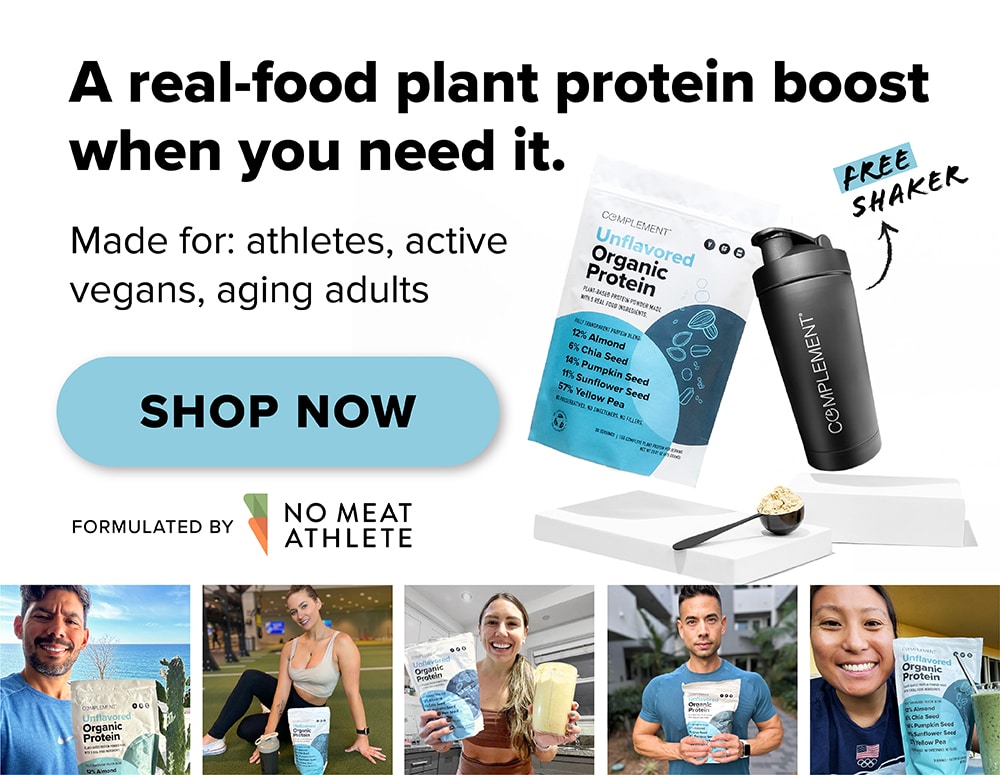
Note: Although getting your protein from whole foods is always best, I created a super-clean vegan protein powder (called Complement Protein) to help provide people eating plant-based diets with a daily boost of organic protein with a balanced amino acid profile.
For someone who cooks all the time, simply eating a variety of whole foods will likely get you the protein you need. But for someone whose schedule doesn’t allow for much cooking at home, getting enough protein from vegetarian foods (and the right kinds) can be a problem.
My mother is one such case. A few weeks after she became vegetarian, she noticed that something wasn’t right; she didn’t have the energy that she did when she ate meat. Suspecting that the problem was not enough protein, she spent a few weeks researching amino acids and protein in vegetarian foods.
This page is the result of such research. If you’re in a similar situation, I hope it helps you out. (Be sure to check out our comprehensive post on vegan protein for more information, and if you’re having trouble transitioning to a plant-based diet and want a little extra help, check out our 80/20 Plants app.)
A little background
There are 20 amino acids that link together to form peptides. Peptides are then linked together to form proteins. There are thousands of different proteins that carry out a large number of jobs in our bodies. We don’t have to worry about consuming all the proteins- our body makes those. We just need to make sure we have all 20 basic “building blocks” (amino acids). Our body (except with certain illnesses or genetic abnormalities) makes 11 of them from chemicals already present in our body, so we really only need to be concerned about consuming the nine that our body cannot make. The nine amino acids that we need to get from our diet are called “essential amino acids.”
Chemical makeup and the role of amino acids in the body
The molecule of an amino acid is made up of a carboxyl group of atoms (one carbon, two oxygen and one hydrogen), an amine group (one nitrogen and two hydrogen atoms) and a side chain. The side chains consist of a combination of carbon, hydrogen, sulfur, nitrogen and/or oxygen and it’s the configuration of these that differentiates one amino acid from another. The branched-chain amino acids are isoleucine, leucine and valine and these are the amino acids responsible for muscle structure.
The amino acids tyrosine, phenylalanine and tryptophan are the aromatic amino acids, having a side chain with a ring-shaped formation and are necessary for the production of the neurotransmitters serotonin and melatonin. Serotonin is important for healthy and restful sleep as well as elevating and stabilizing mood and in the modulation of human sexuality, appetite, and metabolism. Melatonin is important in the regulation of the circadian rhythms (the interior body clock) and is a powerful antioxidant associated with the protection of nuclear and mitochondrial DNA.
Lysine plays an important role in absorbing and conserving calcium and in the formation of collagen. Too little lysine in the diet can lead to kidney stones and other health related problems including fatigue, nausea, dizziness, loss of appetite, agitation, bloodshot eyes, slow growth, anemia, and reproductive disorders. At risk for a low lysine disorder could be vegetarians who follow a macrobiotic diet and athletes involved in frequent vigorous exercise.
Daily requirements and good non-meat sources of specific amino acids
The requirement for the non-essential amino acids has changed considerably over the last 20 years. The following table lists the recommended daily amounts for adults by the World Health Organization, along with the standard one-letter abbreviation. (Recommended daily intakes for children during their first year can be as much as 150% higher, and 10-20% higher for children three years and older.)
Important: This chart lists the vegetable/nut/legume sources with the highest amounts of the amino acids per a 200 calorie serving. However, this may NOT be the most practical source! For instance, 200 calories of watercress provide an abundance of essential amino acid daily requirements, but having only 4 calories per cup, 200 calories would equate to 50 cups! Or egg whites are a terrific source of essential amino acids, but 200 calories of egg whites mean you would need to eat 11 eggs! Not my way of starting the day. With that in mind, I’ve compiled a list of great, enjoyable food sources to meet the daily requirements, at the end of this page.
| Amino acid | WHO Mg/ kg body weight | WHO Mg/ 55 kg (121 lbs) | WHO Mg/ 80 kg (176 lbs) | Best vegan sources (per 200 calories) |
|---|---|---|---|---|
| I Isoleucine | 20 | 1100 | 1600 | Soy protein 2650 mg Watercress 1691 mg Chard 1540 mg Spinach 1322 mg Sunflower seed flour 1474 mg Kidney beans 1297 mg |
| L Leucine | 39 | 2145 | 3120 | Soy protein 4226 mg Watercress 3017 mg Alfalfa seeds raw 2322 mg Kidney beans 2103 mg Tofu 2500mg Sesame flour 2307 mg Sunflower seed flour 2148 mg |
| K Lysine | 30 | 1650 | 2400 | Soy protein 3319 mg Watercress 2436 mg Tofu 2253 mg |
| M Methionine+ C Cysteine | 15 (total) | 825 | 1200 | Sesame flour 994 mg Seaweed spirulina 908 mg Soy protein 690 mg |
| F Phenylalanine + Y Tyrosine | 25 (total) | 1375 | 2000 | Soy protein 2862 mg Cottonseed flour 1870 mg Sesame flour 1596 mg Kidney beans 1473 mg Spinach 1428 mg |
| T Threonine | 15 | 825 | 1200 | Watercress 2418 mg Soy protein 1755 mg Spinach 1496 mg Sesame seed flour 1250 mg Sunflower seed flour 1202 mg Kidney beans 1230 mg |
| W Tryptophan | 4 | 220 | 320 | Soy protein 695 mg Spinach 690 mg Sesame flour 659 mg Sunflower seed flour 451 Watercress 544 mg Turnip greens 400 mg Broccoli rabe 390 mg Asparagus 322 mg Kidney beans 303 mg Oat bran 280 mg |
| V Valine | 26 | 1430 | 2080 | Soy protein 2554 mg Watercress 2491 mg Mushrooms, white 193 mg Sunflower seed flour 1703 mg Sesame seed flour 1682 mg Snow/snap peas 1595 mg Kidney beans 1503 mg |
*Some sources claim histidine to also be an essential amino acid as it is additionally required by infants and growing children. Also, cysteine can usually be synthesized by the human body under normal physiological conditions if a sufficient quantity of methionine is available.
Concerns over soy supplements as the main source of amino acids
If you choose to supplement your diet with whey or soy protein, consider the following: There is a mixed consensus about whether soy contains all of the essential proteins. Some sources claim that it does. Others site that it is not complete- missing methionine, while others report that soybeans are “limiting” in methionine and cysteine.
Methionine assists in breaking down fats and thus prevents build-up of fat in the arteries and liver. Since it is converted to cysteine, it also assists with the removal of heavy metals (including lead) from the body. It’s also a powerful antioxidant, removing free radicals produced in the natural metabolic processes of the body.
But limiting or lacking in even one amino acid can have serious health implications. Muscle and other protein structures could be dismantled to obtain the one amino acid that is missing. Many experts suggest combining soy products with legumes or whole grains to achieve the ideal balance for the body’s requirements. Or, if relying heavily on soy for protein requirements, it would be good to consume foods high in methionine, such as sesame seeds and brazil nuts. Except for spinach, potatoes, or corn, most fruits and vegetables contain little methionine.
Cysteine can usually be made by the human body if a sufficient quantity of methionine is available. Otherwise, cysteine can be found in eggs, milk, whey protein, ricotta, cottage cheese, yogurt, red peppers, garlic, onions, broccoli, brussels sprouts, oats, granola, wheat germ
An interesting note: A heavy dose of cysteine may be useful in preventing or combating some of the negative effects of alcohol, including liver damage and hangover.
Concerns over soy-rich diets
The jury is definitely out as to whether consuming a soy-rich diet is good for you . Many reports indicate that soy’s abundant isoflavones can prevent illness and promote good health. Isofavones are a type of phytoestrogen, a plant hormone that in chemical structure resembles a weak form of human estrogen. The isofavones can compete at estrogen receptor sites, blocking the stronger version produced by the body. Proponents claim that this can reduce the risk of breast and prostate cancer, reduce the risk of heart disease, reduce menopausal symptoms and can slow or reverse osteoporosis.
Other studies present a strong case supporting the dangers of excess soy consumption, claiming that soy products contain:
- Phytoestrogens: (isoflavones) genistein and daidzein, which mimic and sometimes block the hormone estrogen (not a positive result as in the studies above)
- Phytates: block the body’s uptake of minerals
- Enzyme Inhibitors: hinder protein digestion
- Hemagglutinin: a clot-promoting substance which causes red blood cells to clump together. These clustered blood cells cannot properly absorb oxygen for distribution to the body’s tissues, and are unable to help in maintaining good cardiac health.
With so much conflicting information, I would be hesitant to rely heavily on soy products or soy-related supplements to satisfy the bulk of my protein requirements.
Best Protein Sources for Vegans
I’ve compiled a list of some of the best protein sources within different food groups, comparing what could be considered a normal serving.
Of course, although protein from whole foods is best, I developed a clean vegan protein powder (called Complement Protein) to help provide a vegans with a daily boost of organic protein with a balanced amino acid profile.
| Food | Type | Calories | Protein | Notes |
|---|---|---|---|---|
| Apricots, dried (½ cup) | Fruits | 190 cal | 3 gm | low in methionine + cystine |
| Asparagus (½ cup) | Vegetables | 20 cal | 2 gm | all aa in proper ratio |
| Black walnuts (1 oz) | Nuts and Seeds | 173 cal | 7 gm | low in lysine |
| Bread, pumpernickel (1 slice) | Grains | 65 cal | 2 gm | low in lysine |
| Bread, reduced cal white (1 slice) | Grains | 48 cal | 2 gm | low in lysine |
| Broccoli (1 cup) | Vegetables | 52 cal | 6 gm | low in methionine + cystine |
| Brussel sprouts (1 cup) | Vegetables | 65 cal | 6 gm | low in leucine, lysine, methionine + cystine, phenylalanine + tyrosine |
| Buckwheat (1 oz) | Grains | 96 cal | 4 gm | all aa in proper ratio |
| Bulgur dry (1 oz) | Grains | 96 cal | 3 gm | low in lysine |
| Cashews (1 oz) 18 kernels | Nuts and Seeds | 164 cal | 4 gm | all aa in proper ratio |
| Corn, yellow canned (2/3 cup) | Vegetables | 80 cal | 3 gm | high in lysine |
| Couscous, dry (1 oz) | Grains | 105 cal | 4 gm | low in lysine |
| Black-eyed peas (2 oz) | Legumes | 74 cal | 4 gm | all aa |
| Flax seeds (1 T) | Nuts and Seeds | 100 cal | 4 gm | |
| Hemp seeds (2 T) | Nuts and Seeds | 160 cal | 11 gm | all aa in proper ratio |
| Lima beans (4 oz) | Legumes | 88 cal | 5 gm | all aa, low in methionine + cystine |
| Millet, raw (1 oz) | Grains | 106 cal | 3 gm | low in lysine |
| Navy beans (4 oz) | Legumes | 88 cal | 8 gm | all aa,low in methionine + cystine |
| Oat bran (1 oz) | Grains | 59 cal | 5 gm | low in lysine |
| Oatmeal bread (1 slice) | Grains | 73 cal | 2 gm | low in lysine |
| Oats (1 oz) | Grains | 109 cal | 5 gm | low in lysine |
| Peaches, dried (½ cup) | Fruits | 185 cal | 3 gm | low in trptophan and lysine |
| Peanuts without shells (1 oz) | Nuts and Seeds | 160 cal | 7 gm | low in lysine |
| Peas (4 oz) | Legumes | 108 cal | 8 gm | all aa except no trypotophan |
| Pine nuts (1 oz, 167 kernels) | Nuts and Seeds | 190 cal | 4 gm | low in lysine |
| Pistachios (1 oz, 49 count) | Nuts and Seeds | 161 cal | 6gm | all aa in proper ratio |
| Pita, white enriched (4” diameter) | Grains | 77 cal | 3 gm | low in lysine |
| Potato (1 med with skin) | Vegetables | 161 cal | 4 gm | all aa in proper ratio |
| Pumpkin seeds (1 oz, 85 seeds) | Nuts and Seeds | 126 cal | 5 gm | all aa in proper ratio |
| Rice, brown long grain, cooked (1 cup) | Grains | 216 cal | 5 gm | low in lysine |
| Roasted almonds (1 oz, 22 count) | Nuts and Seeds | 171 cal | 6gm | low in lysine and methionine |
| Rye bread (1 slice) | Grains | 83 cal | 2 gm | low in lysine |
| Soy beans (1 oz) | Legumes | 35 cal | 4 gm | all aa, but a little low in methionine+cystine, phenylalanine+tyrosine |
| Spaghetti, whole wheat, dry (2 oz) | Grains | 198 cal | 8 gm | low in lysine |
| Spinach (1 cup chopped) | Vegetables | 65 cal | 6 gm | low in methionine + cystine |
| Sun-dried tomatoes (½ cup, 1 oz) | Vegetables | 72 cal | 4 gm | lacks 5 aa |
| Sunflower seeds (1 oz) | Nuts and Seeds | 166 cal | 5 gm | low in lysine |
| Wheat flour (1 oz) | Grains | 95 cal | 4 gm | low in lysine |
| White bread (1 slice) | Grains | 67 cal | 2 gm | low in lysine |
| White rice, cooked (1 cup) | Grains | 194 cal | 4 gm | low in lysine |
| Whole wheat bread (1 slice) | Grains | 69 cal | 4 gm | low in all aa except tryptophan |
| Whole wheat pita bread (4” diameter) | Grains | 74 cal | 3 gm | low in lysine |
Combination suggestions
If low in tryptophan- Combine with oat bran, pumpkin seeds, sesame seeds, black walnuts, sunflower seeds, cashews, pistachios, almonds, cod, lobster, tuna
If low in methionine + cystine, phenylalanine + tyrosine: combine with chestnuts, brazil nuts, oatmeal, sesame seeds, oat bran