


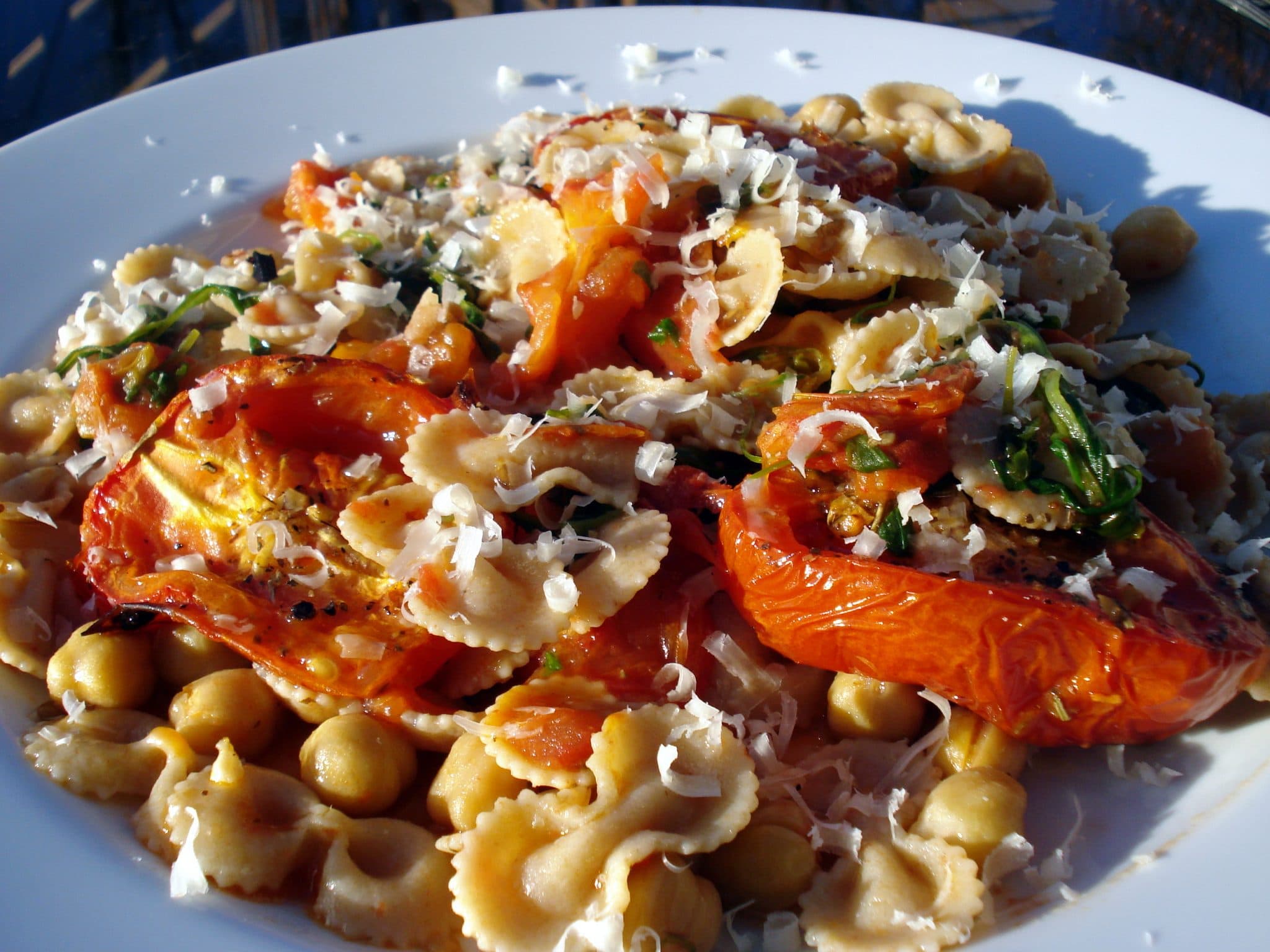
Fire Roasted Tomato Pasta with Chickpeas and Arugula
I’m back, healthy foodies, with the promised roasted tomato pasta recipe! Over the weekend I found a fun recipe in a magazine, then Erin saw a different one on TV, and we decided to combine the two to form one super-recipe.
We Americans have grown so accustomed to the pasta-with-grilled-chicken (or some other meat) dish that pasta without meat seems like only half a meal. And in Italy, it’s just that, since a (usually meatless) pasta course is often served before the meat course. But there’s something so wonderfully humble about that meatless pasta course made with just a few choice ingredients. It’s the difference between the simple, perfect Google homepage and Yahoo’s site, cluttered with useful stuff that nobody really needs. Less is often more. Especially if “less” is served with a glass of Chianti.
The problem with meatless pasta, of course, is that it’s often not filling enough, especially for marathon training. This was my big complaint about Pasta with Roasted Cauliflower and Arugula. You can use Barilla Plus pasta to make it a little more substantial, but the difference is small. Instead, we added chickpeas to boost the protein and healthy calorie content. A lot of people think adding beans, potatoes, or anything else starchy to pasta is weird, but they do it in Italy all the time. Even in classics like Trenette with Pesto, Beans, and Potatoes. Try it; nothing will happen to you!
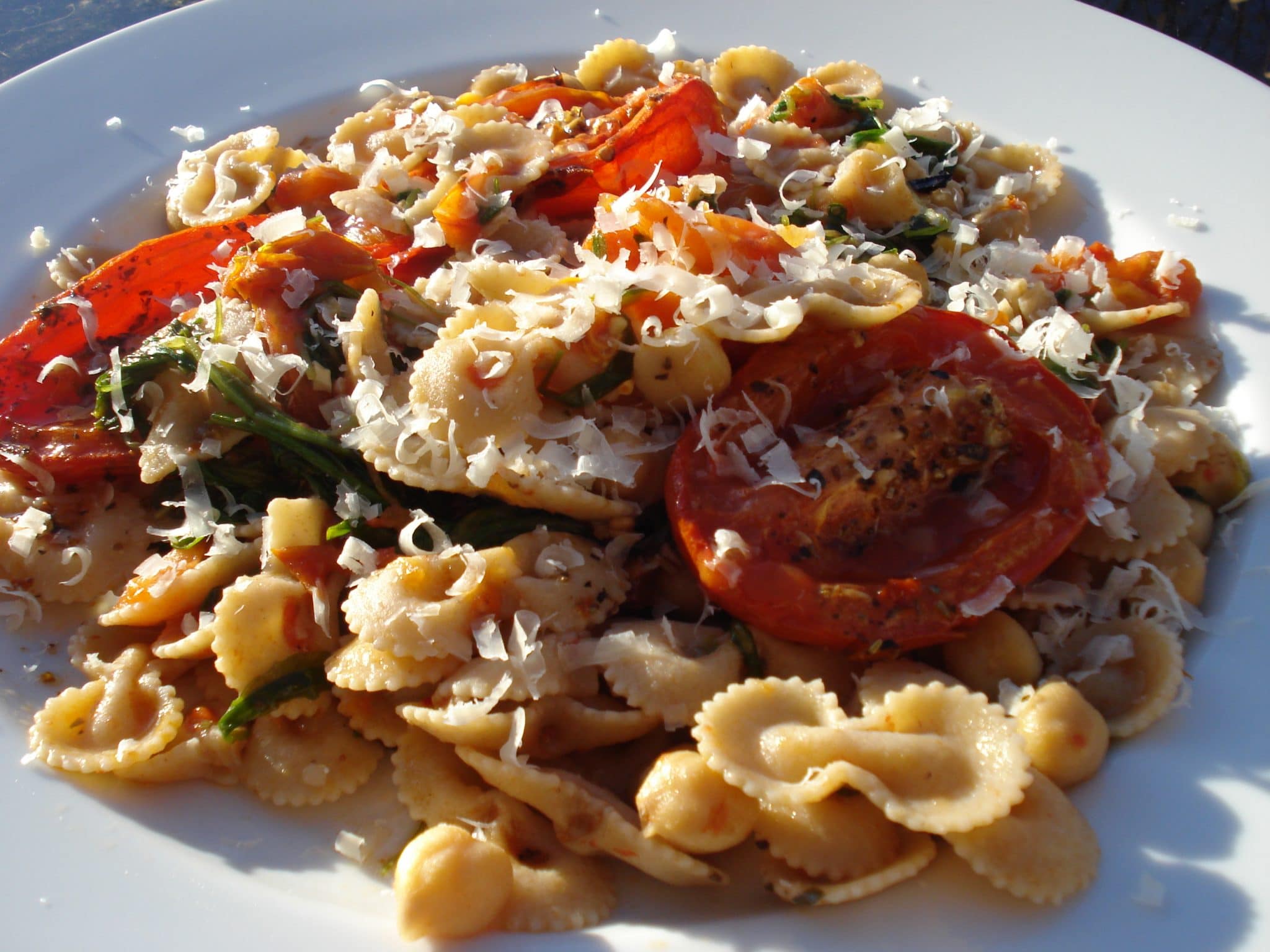 This meal is fantastic. Using fresh plum tomatoes and fresh lemon zest makes the sauce taste, well, really fresh. The tomatoes are roasted in the oven with garlic, Italian seasoning, and some crushed red pepper for just the perfect amount of hot damn! And the acidity of the tomatoes nicely balances the bitterness of the arugula, which we got fresh-picked from the first farmers’ market of the season (if you haven’t discovered the joy of the farmers’ market yet, use the Local Harvest link in my Blogroll to find one near you).
Erin and I unquestionably gave this meal 4 cows out of 5. A first-ballot Hall-of-Famer. That fact that it’s not a “5” is no knock on it; we just can’t be giving those out like Halloween candy.
If a “5” is a meal two standard deviations better than the mean, and we assume meal quality is distributed normally with mean 3, then only about 2.5 percent should be getting a “5”! I can think of plenty of good arguments against my assumptions, like the fact that almost all the meals have been rated “3” or higher, so I’ll just stop. Here’s the recipe.
Roasted Tomato Pasta with Chickpeas Recipe
- 2 lb medium plum tomatoes
- 14.5-ounce can of chickpeas (garbanzo beans)
- 2 cloves minced garlic
- 1/2 cup + 1 Tbsp canola oil
- 4 cups lightly packed arugula
- 1 Tbsp Italian seasoning
- 1/4-1/2 tsp crushed red pepper
- zest of one lemon
- 10 ounces whole-wheat pasta, any shape
- sea salt and black pepper
- Parmesan cheese (optional)
- Preheat the oven to 400 degrees. Cut the tomatoes in half lengthwise, spread out on a foil lined backing pan. Mix together the garlic, Italian seasoning, red pepper, 1/4 cup of canola oil, and few pinches of salt and pepper; pour mixture evenly over tomatoes. Drizzle with another 1/4 cup of canola oil. Roast until soft and lightly browned, about 45 minutes. Crush half of the roasted tomatoes in a large bowl with a fork.
- Boil the pasta water, salt until it tastes like seawater (this is what they do in Italy!), and cook the pasta until al dente. Reserve a little pasta water to loosen the sauce, if needed. While pasta is cooking, heat remaining tablespoon of canola oil over medium heat. Add chickpeas and arugula to the pan. Once chickpeas are heated through and arugula is wilted, add to the crushed tomato bowl with pasta and lemon zest; toss to mix. Add reserved pasta water as needed
- Divide pasta among 4 plates, top with remaining roasted tomatoes and Parmesan cheese. Eat it up!

Leave a Reply
You must try Al Dente Whole Wheat plus Flax Fettuccine. This brand is the best. Cooks in just 3 minutes and has amazing texture. The website is http://www.aldentepasta if you can’t find it in your store.
Thanks Monique, sounds great! 3 minutes?? I’ve been using some flax pastas and I like them a lot. I’ll see if I can find this one in the natural foods store.
We just cooked this and thought it was great. I’ve never baked tomatoes before and can’t believe how good they were. I think I have only had chickpeas cold in a salad or something and have always hated them, but they really brought the meal together. And, since the tomatoes took so long to bake, I used the time to make my pizza dough for tomorrow night. I’ll let you know how that goes, but I have no confidence it will turn out.
Pete, awesome that you made it and it turned out well for you. It really is great to hear that people actually try these recipes. I hope your pizza turns out well; the first time I made it was actually the very best and I haven’t been able to duplicate it since.
I made this for dinner tonight. It was really delicious. Like Pete, I had never roasted tomatoes before and the results were really good, it really made it taste like food I would eat out. The chickpeas were excellent in this; I never would have thought to add them.
My favorite part actually was the lemon zest. That really brought this dish to “authentic italian” in my mind.
Unfortunately I couldn’t find whole wheat farfelle, and the regular was on sale. I got suckered by the price!
I’ve made this a couple of times and it is delicious! I’m not sure why, but I increased the plum tomatoes to 3 pounds. I found 1/2 cup canola to be too much, so. I lessened it, starting with 1/4 cups.
I’m really just learning to cook, so a plant based diet is the best for me.
So DELICIOUS!!! I sautéd some onion before I added chickpeas. Scrapping the bowl!!
Why not olive oil for this recipe?
I made a few minor changes due to what I had on hand (not enough fresh tomatoes or arugula so added some canned, drained tomatoes and other mixed greens) but followed the recipe closely enough to know it’s a keeper. Agree with another poster that the lemon zest makes it distinctive. Love it!
I used little shell pasta—lots of the chickpeas nestle in the shells. (If you’re not averse to cute, this could be a selling point for younger diners.)
Glad I found this site!
10/10 so freaking delicious!!
I just made this dish and WOW…..it will now be added to my rotating lunch or dinner plan. Thank you!!
This looks so good!!! I want to make it now! And, I love the graph and the quick little lesson.